Is Feta Cheese Good For You?
Is Feta Cheese Good for You?
Yes, feta cheese can be a nutritious choice when enjoyed in moderation. It is a source of protein, vitamins B2 and B12, and sometimes probiotics. However, it can be higher in sodium and saturated fat, which means it's best enjoyed in controlled portions. Read on to discover why feta cheese can be part of a healthy diet.
What Is Feta Cheese?
Feta cheese is a tangy, crumbly white cheese commonly used in Mediterranean cuisine. It is typically made from sheep’s milk or a blend of sheep and goat’s milk, though cow’s milk versions are also produced for a milder flavor and are common in the United States.
Feta has been enjoyed for centuries, with its earliest written mention appearing in Homer's Odyssey from the 8th century B.C. Today, it’s used worldwide in salads, pastas, soups, pizzas, and many other dishes.
Feta Cheese Nutrition Facts
Feta cheese made from cow’s milk is an excellent source of vitamin B12 and provides nutrients like protein and riboflavin. When considering the nutritional value of feta, there are plenty of healthy reasons to enjoy this cheese.
Feta’s vitamin B12 supports normal energy metabolism and helps maintian a healthy blood and nervous system. The natural fats in feta help the body absorb fat-soluble vitamins like vitamins A, D, E and K—making it a great topping for salads, vegetable dishes and more.
Feta is also a fermented food, which means it may contain probiotics that support healthy gut function.

Does Feta Cheese Have Lactose?
Feta cheese is naturally lower in lactose, making it easier for many people with lactose intolerance to enjoy in moderation. During the cheesemaking process, much of the lactose is removed along with the whey, and the aging process further reduces lactose levels. This means that while feta still contains some lactose, many individuals with lactose sensitivity can include it in their diet without experiencing discomfort.
For those with a dairy allergy, however, feta should be avoided entirely, as it can trigger an immune response. People who are lactose intolerant can also use lactose-friendly strategies, such as pairing feta with other foods or choosing small portions, to enjoy this versatile cheese safely. Its tangy flavor and crumbly texture make it a popular addition to salads, pastas, and Mediterranean dishes, allowing those with lactose sensitivity to continue enjoying dairy as part of a balanced diet.
Incorporating Feta Cheese In Your Diet
Feta cheese is a versatile addition to meals, adding flavor and nutrients without overpowering other ingredients. It pairs well with nutritious foods like vegetables, grains, legumes, and lean proteins, making it easy to include in a balanced diet.
Feta can be enjoyed in a variety of dishes throughout the day, such as shakshuka eggs with feta cheese for breakfast or a Greek chicken with tzatziki wrap for lunch. It can also be sprinkled over salads, roasted vegetables, or enjoyed as a snack to add a boost of protein and flavor.
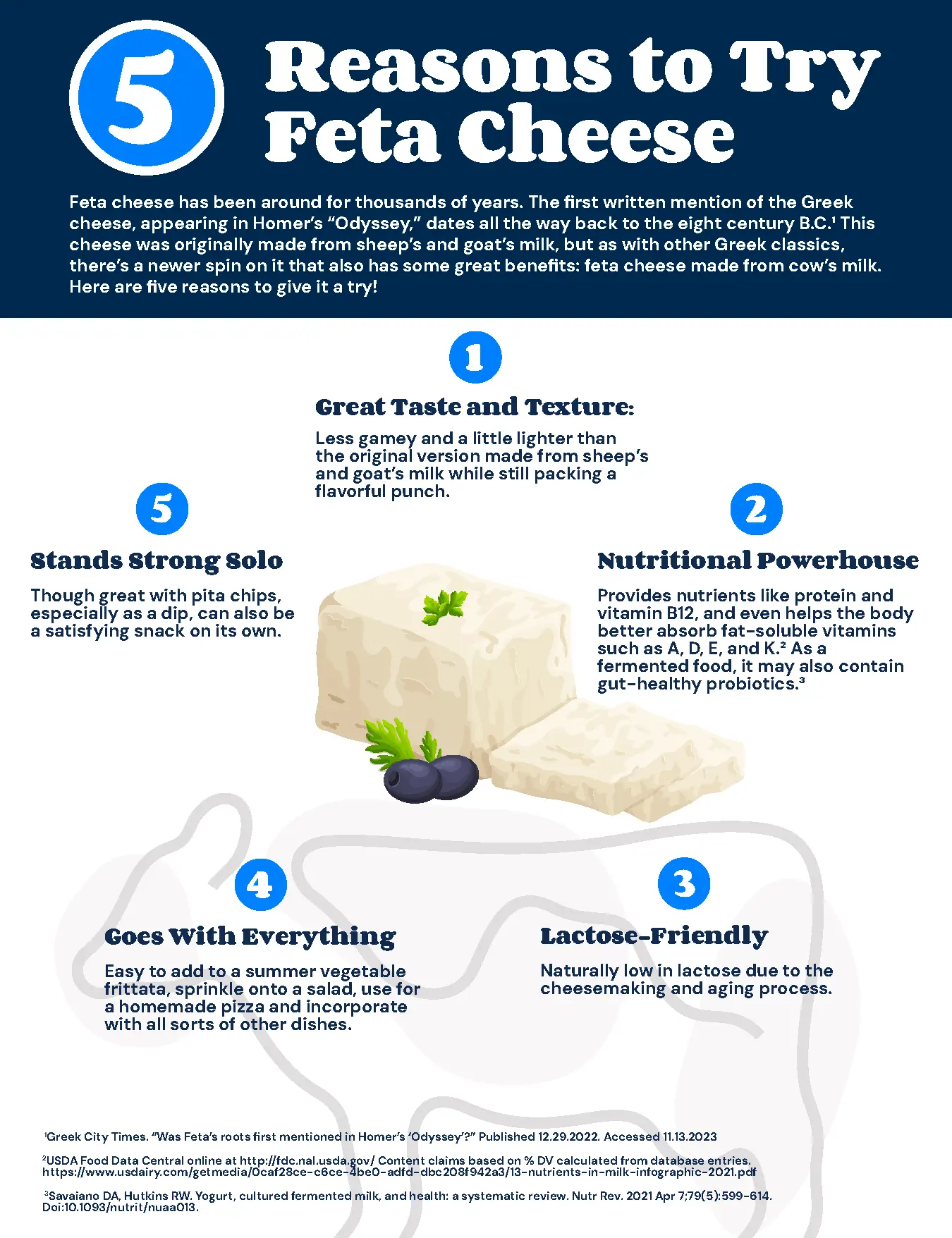
A Short Summary of Feta Cheese
As great as feta cheese tastes, there are plenty of other important things to know about it. Here are some key facts about this type of cheese:
- Feta cheese is a Greek cheese that has existed for thousands of years.
- While feta cheese was originally made solely from sheep’s and goat’s milk, it can also be made from cow’s milk.
- Feta cheese is a natural source of several important nutrients that can benefit our health.
- Feta cheese can be incorporated into all sorts of dishes for every meal of the day.


Continue exploring more tasty recipes
More Recipes


